Soundtrack to a Coup d’Etat is a 2024 documentary about the coup to overthrow the first Congolese Prime Minister Patrice Lumumba, the United States’ involvement in the Congo Crisis, and the role of jazz in the Cold War – or as Congressman Adam Clayton Powell Jr. called it, “the Cool War”.
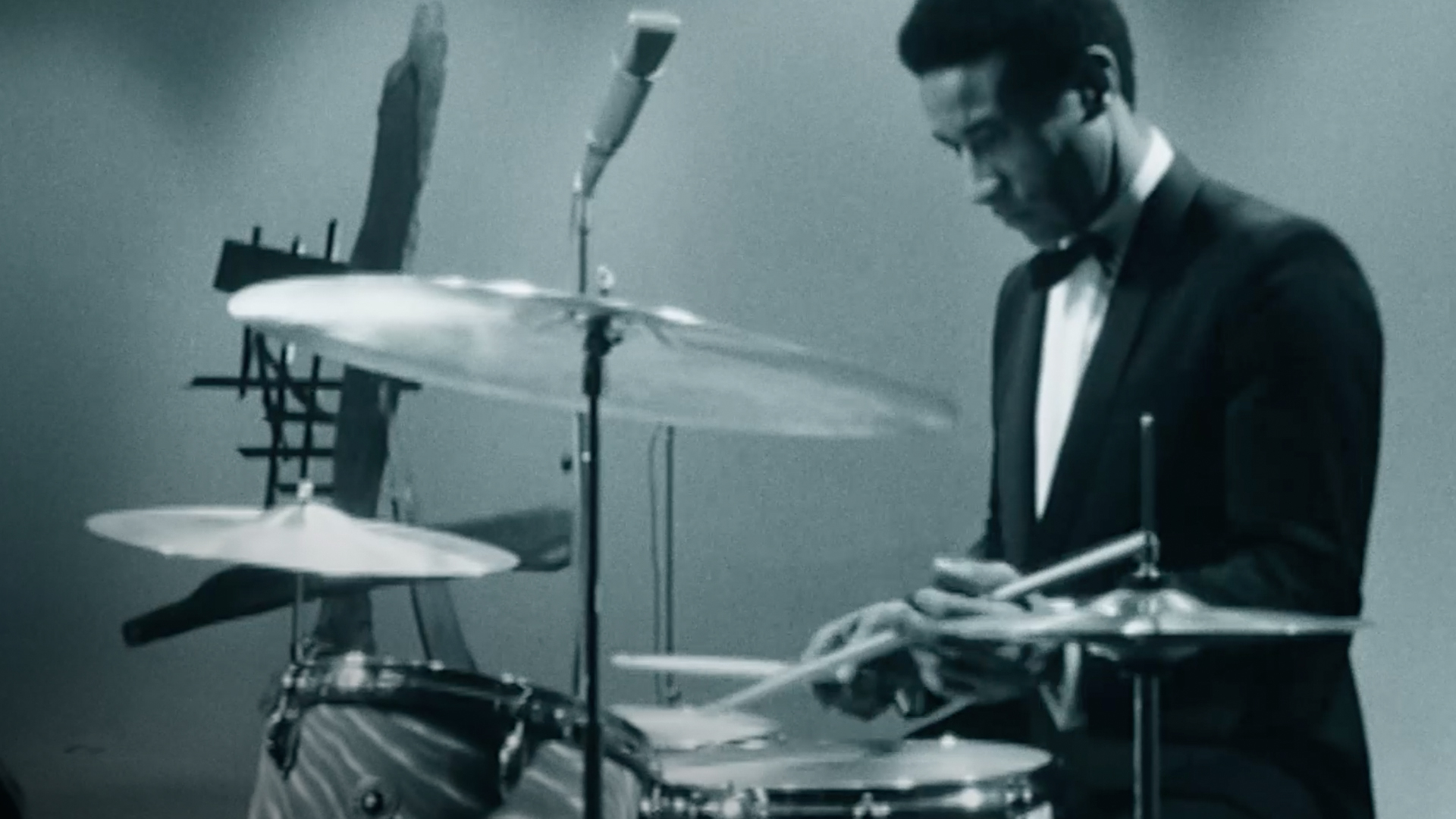
Johan Grimonprez covers a lot of ground over 2.5 hours, weaving together the historical, political and cultural strands in stimulating fashion. The music provides intriguing counterpoints to the neo-colonial chaos of newly independent Congo, and gives the film a unique “cast” that includes Louis Armstrong and Nikita Khrushchev, who finds time between banging his shoes on the desk to offer some stone-cold music criticism: “When I hear jazz, it’s as if I had gas on the stomach.”
The movie explores the USA’s deployment of “jazz ambassadors” (including Armstrong, Duke Ellington and Dizzy Gillespie) to spread its influence around the world; “America’s secret weapon is a blue note in a minor key,” the New York Times said in 1955. This tactic evolved from soft-power propaganda to actual power grabs, when a Satchmo concert in Congo was used as a smokescreen by the CIA.
The Belgian director implies the irony of using jazz, a music synonymous with freedom and African history, to try to overturn African independence. This ultimately backfired as so many of the musicians were understandably sympathetic to Lumumba’s cause, culminating in an incident where jazz legends Max Roach and Abbey Lincoln gatecrashed the UN Security Council to protest his murder in 1961.
Yet this is just one aspect of the dense documentary, and its multi-layered approach can be hard to follow, especially with such complex changes occurring both musically and politically. But in a crowd of docs that either skim the subject’s surface or provide a polemical viewpoint, the wide-ranging and well-researched film is a refreshing change of tempo. Purely comprising archive footage, audio excerpts and citations for every single quotation, Soundtrack to a Coup d’Etat drops real knowledge about this fascinating chapter in recent (even ongoing) history.
With its rigorous yet non-prescriptive approach and scintillating soundtrack (including Nina Simone, Eric Dolphy and Ornette Colman), this daring documentary is sure to have you tapping your shoe, if not banging it on the desk.
 Screen Goblin