A surgeon (Pierre Brasseur) kidnaps young women in order to perform a face transplant on his disfigured daughter Christiane (Édith Scob), in this 1960 French horror film they should have called Franc-enstein.
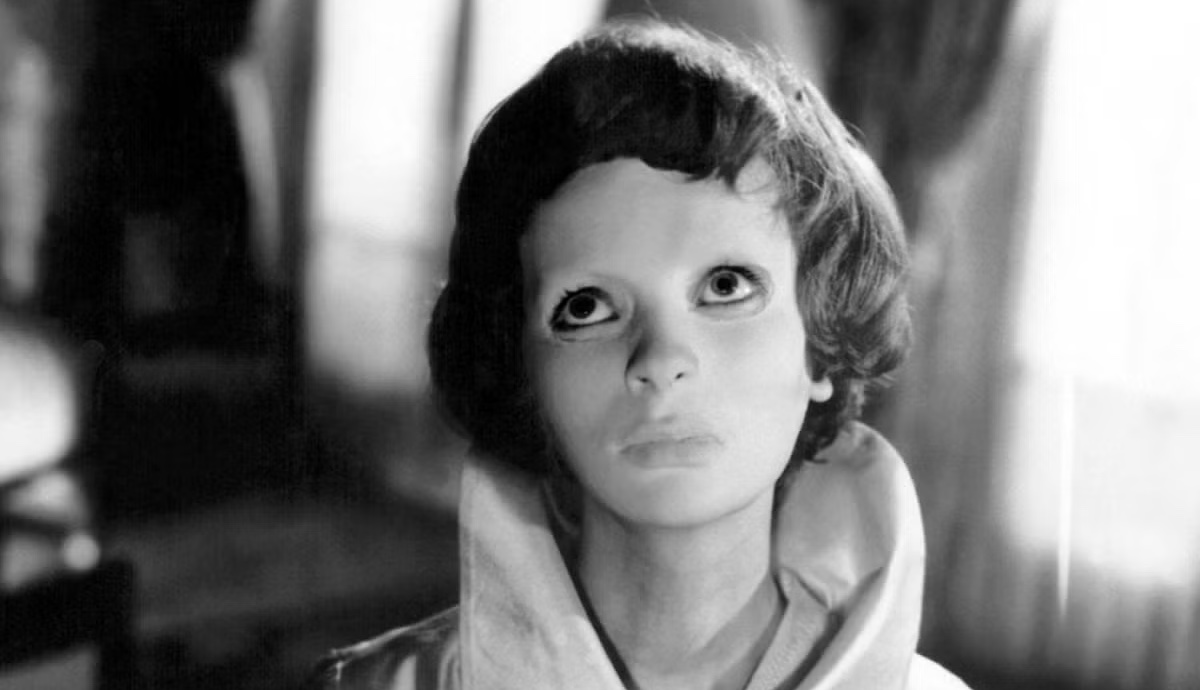
On the face of it this is a story about the lengths parents will go to for their children, like Jingle All the Way only less gross. But Georges Franju cuts deeper into the Frankenstein character, a doctor not acting out of love but personal ambition, obsessed with enacting a miracle at the expense of his daughter’s sanity. He is not saving her but experimenting on her, with the help of his assistant Louise (Alida Valli), indebted to the doctor responsible for her own face – or because she is actually Christiane’s mother. And Christiane is the masked monster of the doctor’s creation, the story’s tragic hero left disfigured by a car crash, who ultimately frees her father’s captured humans and animals into a world she can no longer face.
Eyes Without a Face (Les Yeux sans visage) scandalised audiences in 1960 along with Psycho and Peeping Tom, in the face of pressure from European censors. In making one of France’s first modern horror movies, Franju was told: “No sacrilege because of the Spanish market, no nudes because of the Italian market, no blood because of the French market and no martyrised animals because of the English market.”
And while Franju leaves most of the mutilation to the imagination, he shows the surgeon removing one girl’s face with the same matter-of-factness he brought to The Blood of Beasts (Le Sang des bêtes), his unflinchingly graphic 1949 documentary about Parisian slaughterhouses. Eyes Without a Face never comes close to that level of brutality, but Franju remains horrified by animal cruelty, drawing parallels between a human guinea pig and the dogs and doves whose captivity she shares.
The decision to shoot in black-and-white may also have been partly motivated by censorship, but also lends the movie a haunting, dreamlike fairytale quality that lingers in the mind with the film’s poetic images. The spectral blankness of Christiane’s mask allows us to project every shade of sadness onto her non-existent features, as she floats birdlike around the house whose mirrors have been removed, and the dolls whose faces have been smashed in. Maurice Jarre’s score juxtaposes a carnivalesque theme for Louise with a lilting motif for Christiane, bisecting the film’s nightmarish horror and ethereal tenderness.
For the US release, the frankly perfect title was changed to the confusing The Horror Chamber of Dr. Faustus, and the movie went on to inspire Pedro Almodóvar’s The Skin I Live In – and weirdly the dove obsession of John Woo, who also grafted the face transplant scene onto Face/Off. Despite that the film is unblemished, and when it comes to constructing a list of must-see horror movies, it’s Eyes without a doubt.
 Screen Goblin