50 teenage boys volunteer for a walking tournament where they are shot if they drop below 3 miles per hour, in this carbon-neutral version of Speed.
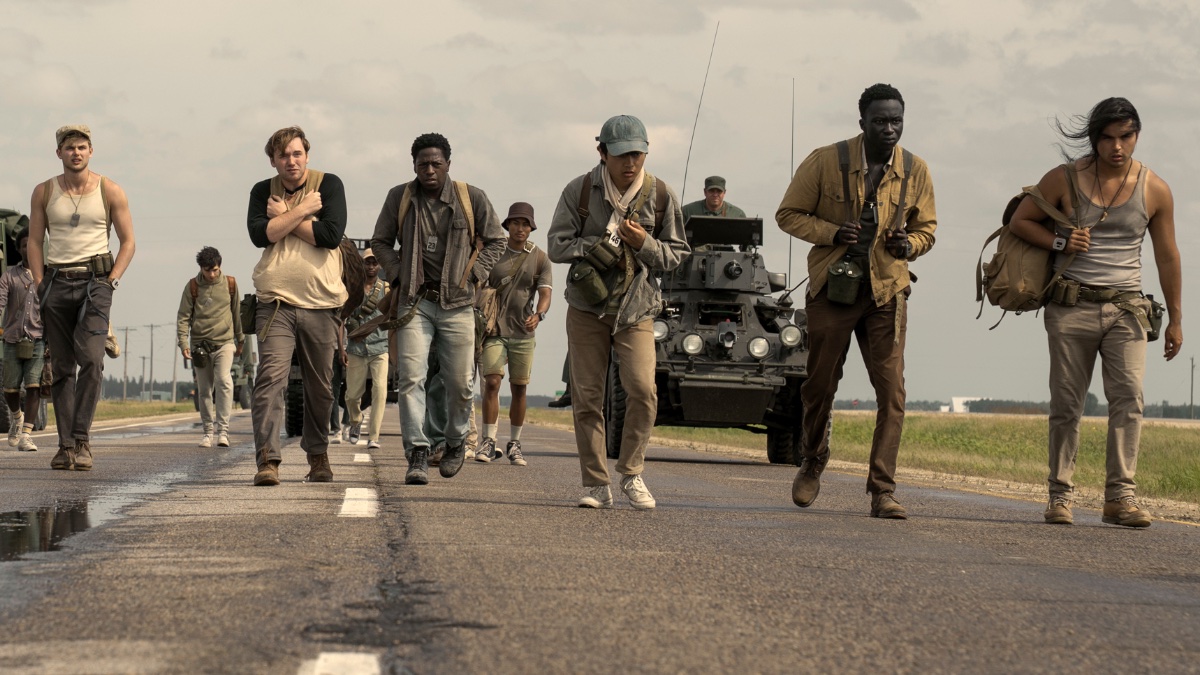
Based on a 1979 Stephen King novel about the Vietnam War but depressingly relevant again, The Long Walk is set in a dystopian America (if you can imagine such a thing) under military rule. In the tradition of ’70s bloodsport flicks like Rollerball and Death Race 2000, the only route out of poverty for the nation’s teenage boys is to compete in the annual walk which has no finish line and only one survivor, who stands to win a cash prize and presumably a job hosting a late night talk show.
The film is hamstrung by toeing a well-trodden line that runs from Spartacus to The Hunger Games, also directed by Francis Lawrence. But where The Hunger Games were set firmly in a fantasy world (one in which Suzanne Collins had never heard of Battle Royale), The Long Walk is as American as mass shootings, illegal wars and police brutality – from the diverse cast of kids who look young enough to fight in Vietnam, to the individualistic rhetoric used to justify the state-sanctioned slaughter of young people. “Any of you can win,” barks military tyrant The Major (Mark Hamill), because the only thing to survive the collapse of civilisation is a lie.
This closeness to reality makes the film more interesting and believable than most high-concept horror movies; where The Purge imagined a political survival scenario without considering the most basic practical implications, The Long Walk is thought through in scatological detail. King’s shit-talking characters breathe warmth and humour into what could quickly become unwatchably bleak, with the touching war-buddy relationship between David Jonsson and Cooper Hoffman keeping spirits surprisingly high given the circumstances. Even the most minor characters make enough of an impression to elicit genuine sadness upon their inevitable deaths.
Narratively the movie is limited by the confines of the story, and Lawrence is not quite up to the task of making it more cinematic. But JT Mollner’s screenplay does a great job of advancing the plot just through dialogue, which is brought to life by the talented young cast, making this a surprisingly potent picture about America’s march towards fascism and the institutional weaponisation of PE.
 Screen Goblin