When dead bodies start washing up on the riverbank, a police detective (Zhu Yilong) loses sight of whether he is solving a case or abetting a cover-up, like a Chinese version of Chinatown – which presumably just makes it Town.
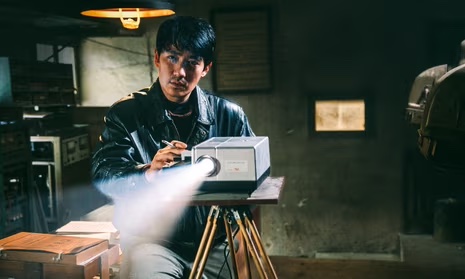
It is interesting to see film noir from a country that mainly exports martial arts and action movies – especially one that serves as a critique of Chinese society, particularly its culture of obedience and conformity, and ostracism of abnormality.
The first victim is an old woman who keeps geese, and a local with learning difficulties nicknamed “the madman” quickly becomes the prime suspect. The detective’s superiors are keen to get the case closed in the name of “collective honour”, so they can get back to their table tennis and the village can go back to sleep. But detective Ma is not convinced the poor guy would say boo to a goose.
As Only the River Flows winds on, Ma’s misgivings are intensified when his unborn baby is diagnosed with a potential birth defect, suggesting his wife has an abortion – not out of any personal prejudice, but because he has seen first-hand how the community treats perceived aberration from his vantage point in the police.
Set in the 1990s, the movie captures the post-Tiananmen Square atmosphere through its cinematography, music and references. Director Wei Shujun shoots on 16mm film through the constant fog of cigarette smoke, a hypnotic combination of ’90s grain and driving rain. The cops even set up shop in a disused cinema, where the editing takes on an increasingly Lynchian style, while the soundtrack combines Beethoven with Howard Shore’s score from David Cronenberg’s Crash.
The main inspiration though is most likely Bong Joon-ho’s Memories of Murder – but where the Korean flick tied its politics and poetry together with a compelling mystery, here the story takes a definite backseat to the enigmatic aura. Despite the constant downpours there are narrative dry spells, with a lot of talking papering over cracks in the plot. But where the picture succeeds is in its cultural critique, questioning whether what’s good for the goose is truly good for the gander.
 Screen Goblin