Anyone who saw Nosferatu and thought “this would be better in colour and with talking” should seek out this 1979 remake and get their head examined.
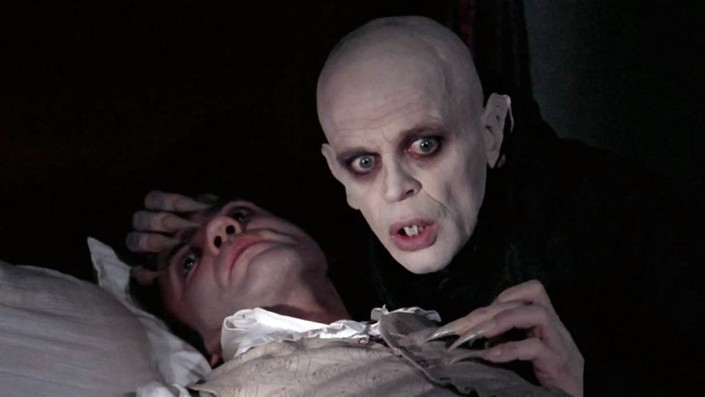
Werner Herzog’s 1979 revamp brings religion, modern dialogue, and more rats and bats than you can shake a broom at, but adds nothing substantial to the 1922 classic, as though the director is too enamoured with the source material to know what to do with it. Indulging his twin passions (German cinema and death), Herzog reverts to Bram Stoker’s character names but sucks out all the atmosphere.
It is funny how dated Nosferatu the Vampyre feels compared to the 103-year-old original, and how giving the characters voices makes them less interesting than the colourful cast of the black-and-white version. If anything the formal rendering loses credibility; without F. W. Murnau’s otherworldly dreamscape, Jonathan Harker’s (Bruno Ganz) lack of reaction to Dracula’s obvious vampirism seems absurd.
Klaus Kinski does bring a haunting sadness and creepy presence to Count Dracula, but it is Isabelle Adjani as Lucy Harker who comes across as most unnatural. This leaves the film stilted and plain whenever Dracula is off screen (which is most of the movie), while the best moments are resurrected from the original anyway.
The picture was simultaneously made in English and German, but it is in translation from expressionist horror to period drama that Nosferatu loses its visual poetry.
 Screen Goblin