George A. Romero moves vampires from Transylvania to Pennsylvania (via Indiana) in this 1977 horror he should have called Interstate with the Vampire.
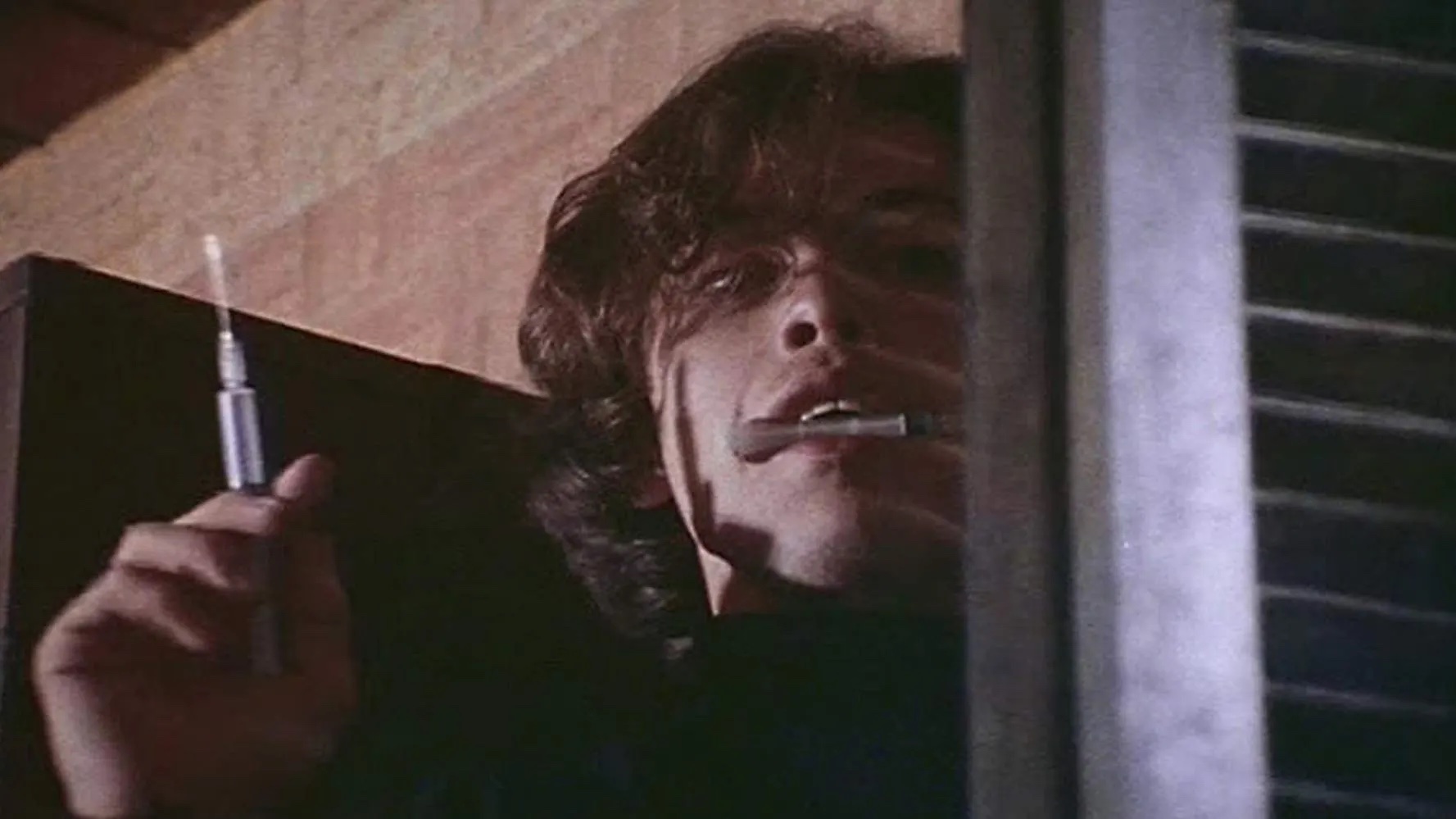
Romero does for vampires what he previously did for zombies in Night of the Living Dead; asks what would happen if they existed in real-world modern America. Always prescient in his satire, Romero’s 20th-century Dracula is a young white man, terrified of women, and immune to the Christian symbols that once had power. To distinguish the film’s reality from fiction, the local priest has recently watched The Exorcist, and the movie depicts a similar exor-schism between the older generation clinging to their bibles and the youth demonised for breaking with tradition.
Like Carrie the previous year, Martin (John Amplas) is a victim of a violently religious upbringing, locked away as Nosferatu reincarnate by his elderly Catholic cousin Tata Cuda (Lincoln Maazel). But unlike Carrie White, Martin has no supernatural abilities; just hypodermic needles, razor blades and a thirst for human blood. Romero keeps it ambiguous as to whether Martin’s black-and-white visions of being chased out of a European town circa 1900 are flashbacks or fantasy – though Cuda is so sure of the former that Martin becomes convinced he is 84 going on 20.
But Romero is less concerned with the question of vampirism and more the question of who is crazy? As in his zombie flicks, the monster holds a mirror to the hypocrisies of modern society – and like the alleged vampire, we see ourselves in its reflection. The director confronts sexual harassment, urban isolation and moral panic (making it ironic that the film was caught up in the video nasties scandal), but keeps the focus on the strangely sympathetic and apologetic protagonist.
This was Romero’s favourite of his pictures, and it stands out for having that character focus, as well as in exploring his native Pittsburgh. One character (played by Tom Savini, who also did the effects) discusses the economic decline of the Steel City, and Romero shows cars being scrapped for emphasis. But he juxtaposes that urban imagery with gothic shots recalling the silent expressionism of Murnau’s Nosferatu and Hitchcock’s The Lodger. And while not as famously influential as Romero’s zombie trilogy, Martin looms large in the postmodern mashup An American Werewolf in London, and the kitchen sink horror of Henry: Portrait of a Serial Killer – while the character’s methods are almost identical to Dexter.
Bleak, brutal and weirdly beautiful, Martin is an eternally fascinating picture. Romero extracts the camp from the vamp genre without losing its dark sense of humour, resulting in the unsexiest vampire movie until Twilight came along.
 Screen Goblin