29 years before 28 Days Later, George A. Romero spawned a virus that turns half the population insane; a phenomenon that has occurred every four years ever since.
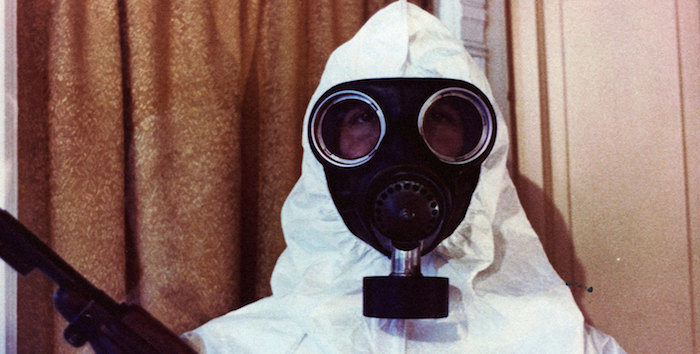
1973’s The Crazies begins with a man smashing up his house and setting it on fire with his children inside, a frighteningly stark opening whose lack of context tells you everything you need to know. The context is raging outside, between the Vietnam War, the Kent State shootings and the Watergate scandal; a nation gaslit by the government turning on its civilians.
Romero presents the military sent to contain the virus as identical drones that evoke the KKK in their white hazmat suits and gas masks, a bold choice that renders half the characters indistinguishable and inaudible, but paints an alarmingly real picture of administrative dysfunction and faceless authority; the president too is shown only from the back of the head. And while its nuclear satire is very much in the shadow of Dr Strangelove, Romero’s chaotic conversations, staccato editing and low-budget intensity thrust its weapons-grade paranoia into American life.
Using actors who look as out of their depth as the characters, the film is relentlessly lifelike in execution. It lacks the artfulness of Night of the Living Dead, but that horrible sense of normality brings its ideas even closer to home – particularly in the wake of the Flint water crisis and Covid, echoes of The Crazies‘ virus spreading through the town’s water supply and its government’s mistrust of scientists; “We’re gonna keep it contained until it runs its course.”
The movie pays little attention to the virus itself and focuses on the ensuing martial law and civil war that change the meaning of the title. As the townsfolk fight back against the trigger-happy soldiers, the infected and uninfected become indistinguishable, which makes every civilian a military target. This is not the fantasy-horror of other worlds but the sci-fi of here, and the dystopia of now.
 Screen Goblin